MPA Governance

MPA Governance

The Foundation of Effective Marine Protected Area Management

Marine Protected Areas do not succeed through boundaries on maps alone.

Their success depends on the systems, institutions, and leadership that guide how decisions are made, how resources are managed, and how people work together to protect marine ecosystems.

This is the domain of governance.

MPA Governance is about creating the structures and processes that enable marine protected areas to function effectively — ensuring that conservation goals are balanced with the needs of communities, economies, and ecosystems.

Within the WIO-COMPAS competence framework, governance represents one of the most critical pillars of professional excellence.

Governing the Ocean Responsibly

Marine ecosystems are shared spaces.

They support fisheries, tourism, coastal protection, cultural heritage, and biodiversity.

Managing these diverse interests requires professionals who understand not only ecology but also policy, law, institutions, and stakeholder relationships.

Effective governance means:

Clear management structures
Transparent decision-making
Inclusive stakeholder participation
Strong accountability mechanisms
Alignment with national and regional policy frameworks

Balancing Conservation and Community

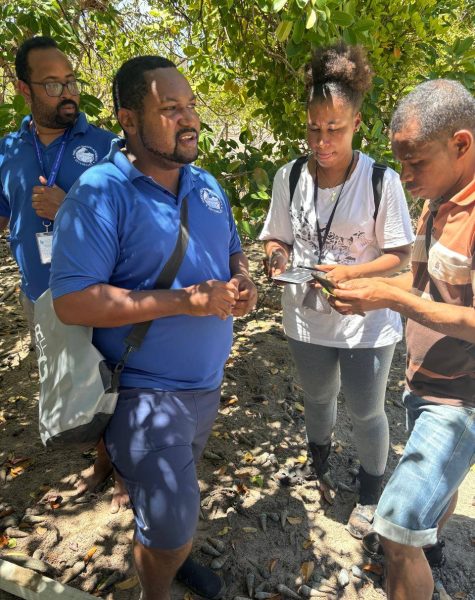
Many marine protected areas exist alongside coastal communities that rely on the ocean for their livelihoods. Governance therefore involves more than enforcing regulations — it requires building trust, collaboration, and shared responsibility. MPA professionals must engage with: • Local communities and traditional resource users • Government agencies and policymakers • Research institutions and conservation organisations • Tourism operators and private sector stakeholders Through effective governance, these diverse voices can be brought together to support sustainable and equitable management of marine resources.
Policy Leadership Ethics Competence

Strong governance frameworks enable marine protected areas to operate with clarity and purpose.

Professionals working within this competence area must understand how marine conservation fits within broader policy environments, including:

• National environmental legislation

• Marine spatial planning frameworks

• International conservation agreements

• Regional ocean governance initiatives

At higher levels of responsibility, MPA professionals contribute to shaping policies and institutional strategies that influence marine conservation across entire countries and regions.

Leadership in governance ensures that conservation efforts remain coordinated, adaptive, and responsive to emerging challenges such as climate change, coastal development, and overfishing.

Governance is also about values.

Professionals responsible for managing marine protected areas must uphold high standards of ethics, transparency, and accountability.

WIO-COMPAS emphasises ethical leadership as a central component of professional competence.

This includes:

• Acting with integrity and fairness

• Ensuring equitable participation in decision-making

• Promoting responsible stewardship of marine resources

• Maintaining transparency in management processes

Through these principles, MPA professionals build trust among stakeholders and strengthen the legitimacy of conservation initiatives.

Within the WIO-COMPAS certification framework, MPA Governance is assessed as a critical competence area.

Candidates are evaluated on their ability to:

• Understand and apply governance frameworks

• Engage effectively with stakeholders

• Navigate policy and institutional systems

• Support transparent and accountable management practices

• Demonstrate ethical leadership in conservation

These skills ensure that certified professionals are capable of contributing to the long-term success of marine protected areas.

Stewardship Beyond Boundaries

Ultimately, governance in marine protected areas is about stewardship. It is about guiding decisions that affect ecosystems, communities, and future generations. Through strong governance, marine protected areas become more than protected spaces — they become living systems where conservation, livelihoods, and knowledge come together. WIO-COMPAS recognises the professionals who lead this work and ensures that their competence continues to shape the future of marine conservation in the Western Indian Ocean.

Contact

  • Mizingani Street, House No. 734, Zanzibar
  • + 255 24 2233472
  • info@wiocompas.org

Brochures

View our Handbook for an easy-to-read guide on all of the services offered.

We provide expert guidance and personalized strategies to help you achieve financial growth.

Elgin St. Celina, Delaware 299
Call Us: (603) 555-0123
Mon - Sat: 8.00am - 18.00pm